
 خبری دربارهی up (UP)
How to Set Up a Crypto Wallet: Securing Your Coins in Seven Steps
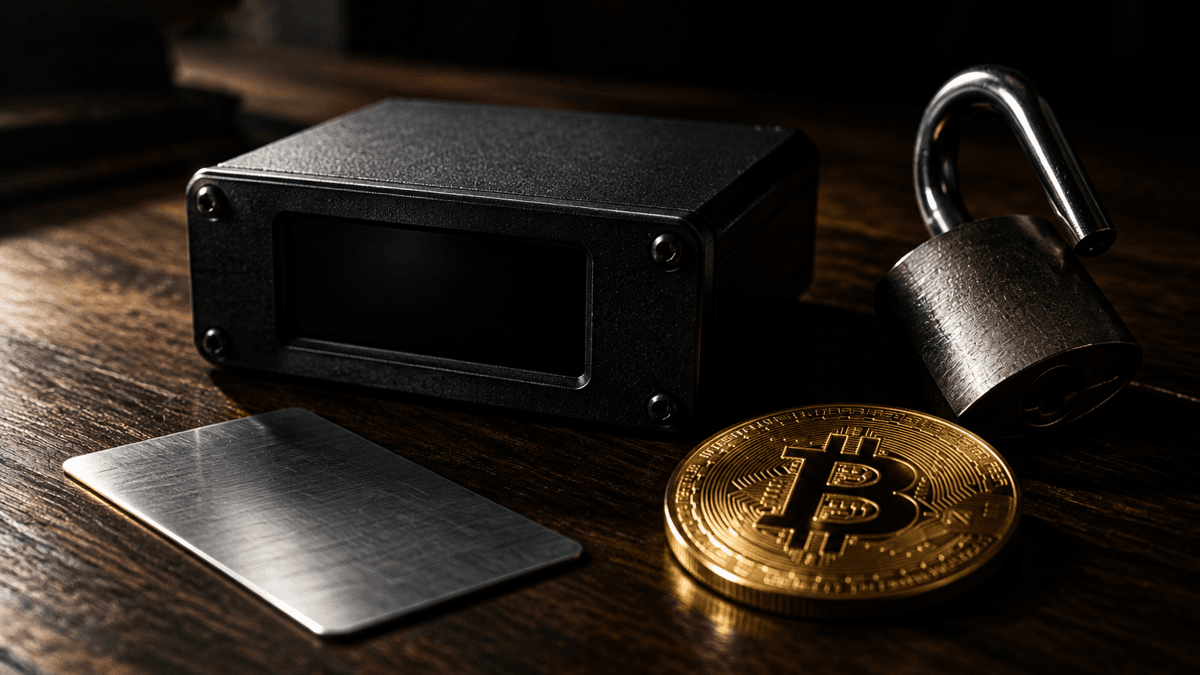
Setting up your own crypto wallet takes about twenty minutes and comes down to four moves: choose the wallet type, generate the wallet, back up the recovery words offline, and use a small test amount to check that funds travel out and back. The third move decides everything that follows, because it is the only one nobody can catch up on for you. This guide walks through each of those steps, explains the terms at the point where you first meet them, and closes with what a self-custodied wallet means in legal and tax terms in Germany. What a Crypto Wallet Stores, and Why Your Coins Are Never Inside It The name is misleading. A wallet is not a purse holding coins. Germany’s Federal Ministry of Finance puts it plainly in its letter of 6 March 2025: “No crypto assets are held in the wallet itself; they always remain on the blockchain” (paragraph 17). Keyring would be the more accurate translation. What the wallet actually manages are two kinds of keys. The public key is the receiving address; the ministry compares it to an IBAN or an email address (paragraph 18). It may be known to others, because its only job is to assign balances on the blockchain. The private key is its counterpart: it produces the digital signature under every payment and is known to the holder alone. From that follows the sentence this whole text rests on: whoever controls the private key controls the funds. The Federal Fiscal Court took the same view for tax purposes in 2023, attributing crypto assets to whoever is able to initiate transactions (judgment of 14 February 2023, IX R 3/22). Three Terms You Need for the Rest Private key: the secret number used to sign a payment. Anyone who knows it can move the funds. Address: the public string others use to send you funds. The private key cannot be derived back from it. Recovery words, also called seed or recovery phrase: a list of twelve or twenty-four words from which every private key in a wallet can be regenerated. Whoever holds that list holds the wallet, regardless of the device. There is, incidentally, no limit on how many wallets one person may have, and each blockchain generally needs its own, because address formats differ. Anyone holding Bitcoin alongside balances on other networks will therefore usually run several wallets side by side. Custodial or Self-Custody: The One Question That Comes First Before you install anything, you decide how your assets are held. There are exactly two options. In the custodial model, a company holds the private key for you. Your access runs through a username, a password and a second factor. An account at a trading platform works this way.
عنوان اصلی (انگلیسی): How to Set Up a Crypto Wallet: Securing Your Coins in Seven Steps
مشاهدهی خبر کامل در منبع ↗ بازگشت به upاین خلاصه بهصورت خودکار از کوینمارکتکپ ترجمه شده و ممکن است خطای ماشینی داشته باشد؛ صرفاً جهت اطلاعرسانی است و توصیهی معاملاتی نیست.